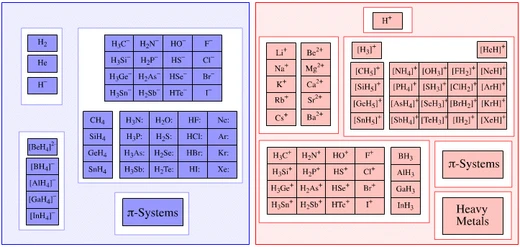
Acid strength
Acid strength measures proton donation tendency via dissociation constants.

Linsley, Clyde Maurice; Bauer, Frederick Charles · Public domain
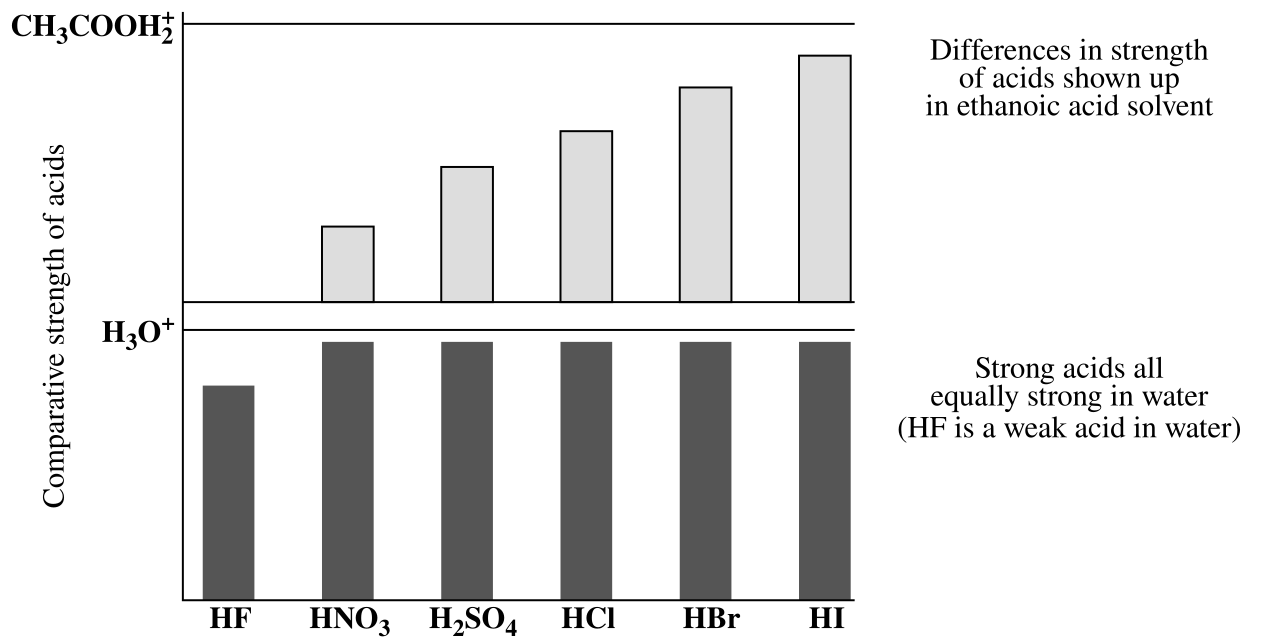
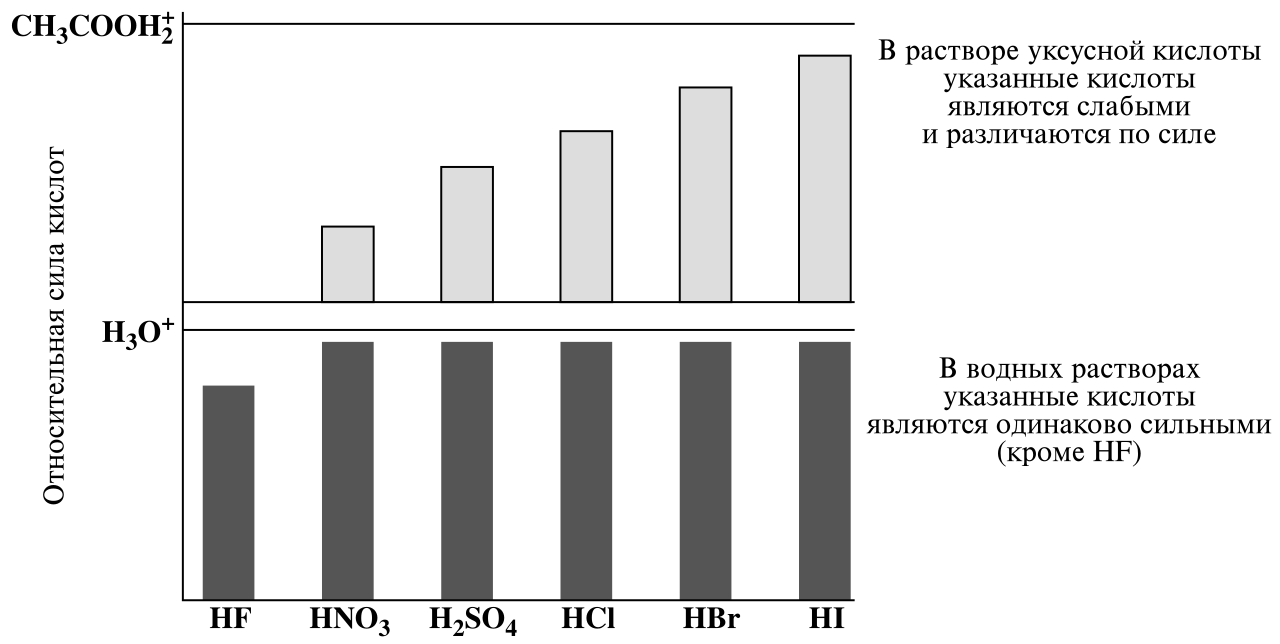
Acid strength is the tendency of an acid, symbolized by the chemical formula HA, to dissociate into a proton (H+) and an anion (A−). The dissociation of a strong acid in solution is effectively complete except in its most concentrated solutions, while a weak acid is only partially dissociated, with both the undissociated acid and its dissociation products present in equilibrium. Acid strength is quantified by the acid dissociation constant (Ka) and is solvent-dependent, as exemplified by hydrogen chloride being a strong acid in water but a weak acid in glacial acetic acid.
- field
- Chemistry
- known_for
- Quantifying the tendency of acids to donate protons via dissociation constants (Ka) and Hammett acidity functions (H0)
- key_measure
- Acid dissociation constant (Ka) and pKa = -log Ka
- strong_acid_threshold
- pKa < -1.74
- example_strong_acids
- Hydrochloric acid (HCl), perchloric acid (HClO4), nitric acid (HNO3), sulfuric acid (H2SO4)
- example_weak_acid
- Acetic acid (CH3COOH)
Lore & Background
Acid strength is defined by the equilibrium of an acid HA dissociating into H+ and A−. Strong acids, such as hydrochloric acid and perchloric acid, dissociate completely in dilute aqueous solution, while weak acids like acetic acid only partially dissociate, establishing an equilibrium. The strength of a weak acid is quantified by its Ka value, which can be determined experimentally by titration methods. Stronger acids have larger Ka and smaller pKa values, reflecting easier loss of a proton. Two key factors contributing to deprotonation ease are the polarity of the H−A bond and the size of atom A, which determine bond strength, as well as the stability of the conjugate base.
Reader's Guide
The concept of acid strength is fundamental to chemistry, distinguishing between strong acids that fully dissociate and weak acids that partially dissociate in solution. The acid dissociation constant (Ka) and its logarithmic form (pKa) provide a quantitative measure, with stronger acids having pKa values less than about -2. However, acid strength is solvent-dependent; for example, hydrogen chloride is strong in water but weak in glacial acetic acid. The Hammett acidity function (H0) measures the tendency of an acidic solvent to donate a proton to a reference solute, and for concentrated solutions of strong acids with pH < 0, H0 is a better measure than pH. This divergence between Ka and H0 values highlights that they measure distinct properties. The leveling effect occurs for acids with pKa less than about -2 due to the high buffer capacity of solutions with pH 1 or less. Strong acids include nitric acid (pKa -1.6), sulfuric acid (first dissociation pKa ≈ -3), and superacids like fluoroantimonic acid and magic acid. Weak acids, such as acetic acid, are characterized by partial dissociation and equilibrium between HA and its ions.
Did You Know?
- Hydrogen chloride is a strong acid in aqueous solution but a weak acid when dissolved in glacial acetic acid.
- Hydrogen fluoride has a pKa of 3.2 in water (weak acid) but an H0 value of –15 as a neat medium, making it a superacid.
- The strength of a weak organic acid may depend on substituent effects, while the strength of an inorganic acid depends on the oxidation state of the atom to which the proton is attached.
- For concentrated solutions of strong acids with pH < 0, the Hammett acidity function (H0) is a better measure of acidity than pH.
Gallery

Frequently Asked Questions
What is Acid strength?
Acid strength describes how readily a compound written as HA releases its proton (H⁺) to form the anion A⁻ in solution. It is the core concept that separates strong acids, which dissociate almost completely, from weak acids that only partially break apart and maintain an equilibrium mixture.
How do fans quantify Acid strength?
The standard metric is the acid dissociation constant Ka, often expressed in its logarithmic form pKa (the negative log of Ka). A pKa below −1.74 is the conventional cutoff for labeling an acid as strong.
What are Acid strength's key examples in the canon?
Hydrochloric, perchloric, nitric, and sulfuric acids serve as the classic strong-acid entries, while acetic acid (CH₃COOH) is the go-to weak-acid counterpart. Strong acids dissociate essentially to completion in dilute solution, whereas weak acids keep both undissociated molecules and ions present at equilibrium.
Why does Acid strength depend on the solvent?
The same molecule can shift categories depending on the medium—for example, HCl behaves as a strong acid in water but only as a weak acid in glacial acetic acid. This solvent dependence is why every Ka or pKa value is always reported for a specific solvent system.
What role does Acid strength play in the broader Acids and Bases encyclopedia?
It underpins every acid–base equilibrium discussion, from pH and buffer calculations to the Hammett acidity function H₀. Without a quantitative measure of proton-donation tendency, the entire framework of acid–base chemistry would lack its central organizing principle.
More in Acids And Bases 1-24
Elsewhere in the Acids And Bases universe
Spotted an error? Know more?
This is a living reference — every entry is fact-audited, and reader corrections feed straight into our audit queue. Suggest an edit · See this site's audit record