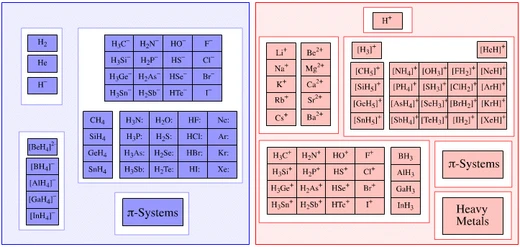
Conjugate (acid-base theory)
Conjugate pairs form when acids donate protons to bases.

In the Brønsted–Lowry acid–base theory, a conjugate acid is a compound formed when a base gains a proton (H⁺), while a conjugate base is what remains after an acid has donated a proton. These terms are not fixed for a given substance but depend on the direction of the reaction. Conjugate acid–base pairs are central to understanding acid–base reactions, buffer systems, and the relative strengths of acids and bases.
- field
- Chemistry (acid–base theory)
- known_for
- Conjugate acid–base pairs in Brønsted–Lowry theory
- related_concept
- Proton transfer in acid–base reactions
Lore & Background
Johannes Nicolaus Brønsted and Martin Lowry introduced the Brønsted–Lowry acid–base theory, defining an acid as any compound that can donate a proton and a base as any compound that accepts a proton. A conjugate acid is a base with a hydrogen ion added, and a conjugate base is an acid minus a proton. Because some acids can donate multiple protons, the conjugate base of an acid may itself be acidic. In an acid–base reaction, the acid loses a proton and the base gains one, forming a conjugate base and conjugate acid respectively. For example, when nitric acid (HNO₃) donates a proton to water, the conjugate base is nitrate (NO₃⁻) and the conjugate acid is hydronium (H₃O⁺). The terms 'acid,' 'base,' 'conjugate acid,' and 'conjugate base' can be swapped if the reaction is reversed. The strength of a conjugate acid is proportional to its splitting constant; a stronger conjugate acid splits more easily. A strong acid has a weak conjugate base, while a weak acid does not necessarily have a strong conjugate base. For instance, hydrochloric acid (HCl) is a strong acid, so its conjugate base (Cl⁻) is weak. Ethanoate, the conjugate base of ethanoic acid, has a base splitting constant of about 5.6×10⁻¹⁰, making it a weak base.
Reader's Guide
Conjugate acid–base pairs are fundamental to the Brønsted–Lowry theory, which reframes acid–base chemistry as proton transfer. This concept allows chemists to predict the direction of reactions, compare acid and base strengths, and design buffer solutions. Buffers, such as the carbonic acid–bicarbonate system in human blood, rely on a weak acid and its conjugate base (or a weak base and its conjugate acid) to resist pH changes. Common laboratory buffers include acetate buffer, made from acetic acid and its conjugate base acetate (as a salt like sodium acetate). The ability to identify conjugate pairs—by noting which species gains or loses a proton—is a core skill in chemistry. The theory also explains why a strong acid yields a weak conjugate base, and vice versa, guiding the selection of acids and bases for specific reactions. Overall, conjugate acids and bases provide a systematic way to understand and manipulate chemical equilibria in both organic and inorganic contexts.
Did You Know?
- A conjugate acid is a base with a hydrogen ion added to it.
- The simplest anion that can be a conjugate base is the free electron in solution, whose conjugate acid is atomic hydrogen.
- In the carbonic acid–bicarbonate buffer, CO₂ and H₂O form H₂CO₃, which then dissociates into HCO₃⁻ and H⁺.
- Ringer's lactate solution contains the conjugate base of lactic acid combined with sodium, calcium, and potassium cations.
Frequently Asked Questions
Who is Conjugate (acid-base theory)?
In the Brønsted–Lowry framework, a conjugate acid is simply the species you get when a base accepts a hydrogen ion, and a conjugate base is what's left over once an acid has given one up. Neither label is permanent—it shifts depending on which direction the reaction is running.
What are Conjugate (acid-base theory)'s powers/role?
Conjugate pairs drive the entire proton-transfer mechanism that defines Brønsted–Lowry chemistry. They act as the 'before and after' snapshots of any acid–base event, linking the reactant to its product in a single, reversible step.
How does Conjugate (acid-base theory)'s story end?
The narrative resolves the moment equilibrium is reached, at which point the conjugate acid and base coexist in fixed ratios dictated by their relative strengths. There is no single 'final form'; the pair simply settles into whatever balance the equilibrium constant demands.
Why is Conjugate (acid-base theory) important?
Without the conjugate-pair concept you couldn't explain buffer capacity, predict which side of a reaction is favored, or compare the strength of one acid or base against another. It is the structural backbone of quantitative acid–base chemistry in the Brønsted–Lowry model.
What is Conjugate (acid-base theory)'s relationship to Proton Transfer?
Proton transfer is the action that creates the conjugate pair, while the pair is the direct result of that transfer. Every time a hydrogen ion moves from one species to another, a new conjugate acid–base pair is generated on each side of the reaction.
More in Acids And Bases 1-24
Elsewhere in the Acids And Bases universe
Spotted an error? Know more?
This is a living reference — every entry is fact-audited, and reader corrections feed straight into our audit queue. Suggest an edit · See this site's audit record