Brønsted–Lowry acid–base theory
Acids donate protons; bases accept protons.

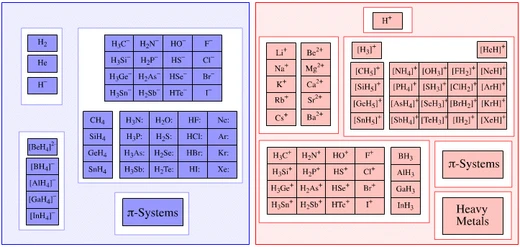
The Brønsted–Lowry theory, also called the proton theory of acids and bases, is an acid–base reaction theory developed independently in 1923 by physical chemists Johannes Nicolaus Brønsted (in Denmark) and Thomas Martin Lowry (in the United Kingdom). It generalises the Arrhenius theory by defining acids as proton donors and bases as proton acceptors, with reactions involving the exchange of a proton (H+).
- field
- Physical chemistry
- known_for
- Brønsted–Lowry acid–base theory (proton theory of acids and bases)
- developed_in
- 1923
- developers
- Johannes Nicolaus Brønsted (Denmark) and Thomas Martin Lowry (United Kingdom)
Lore & Background
The theory was proposed independently in 1923 by Johannes Nicolaus Brønsted in Denmark and Thomas Martin Lowry in the United Kingdom. Its basic concept is that when an acid and a base react, the acid forms its conjugate base, and the base forms its conjugate acid by exchange of a proton (H+). This generalises the earlier Arrhenius theory, which defined acids as substances that dissociate in aqueous solutions to give H+ and bases as substances that give OH−.
Reader's Guide
The Brønsted–Lowry theory broadened the understanding of acid–base reactions beyond aqueous solutions, as it does not require an acid to dissociate. It defines acids and bases by their role in proton transfer: an acid is a proton donor, a base is a proton acceptor. The theory is illustrated by equilibrium equations such as HA + B ⇌ A− + HB+, where HA is the acid, B is the base, A− is the conjugate base, and HB+ is the conjugate acid. Water is amphoteric, acting as either an acid or a base. The theory also applies to non-aqueous solutions, as seen with substances like aluminium hydroxide, which can act as an acid or base depending on the reaction. Most acid–base reactions are fast, with substances in dynamic equilibrium.
Did You Know?
- The theory was developed independently in 1923 by Johannes Nicolaus Brønsted in Denmark and Thomas Martin Lowry in the United Kingdom.
- In the Brønsted–Lowry theory, an acid forms its conjugate base and a base forms its conjugate acid by exchange of a proton (H+).
- Water is amphoteric, meaning it can act as either an acid or a base.
- The theory does not require an acid to dissociate, unlike the Arrhenius theory.
Frequently Asked Questions
Who is Brønsted–Lowry acid–base theory?
It is the proton theory of acids and bases, independently conceived in 1923 by Danish physical chemist Johannes Nicolaus Brønsted and British physical chemist Thomas Martin Lowry. It sits squarely in the field of physical chemistry and was designed to generalise the older Arrhenius framework.
What are Brønsted–Lowry acid–base theory's powers/role?
Its defining 'power' is re-casting every acid–base event as a proton (H⁺) transfer: the acid donates a proton while the base accepts one. Because the definition hinges on proton exchange rather than on water, it can describe reactions in organic solvents, gases, and other non-aqueous media.
How does Brønsted–Lowry acid–base theory's story end?
Rather than a dramatic finale, the theory became a permanent fixture in chemistry curricula worldwide and still serves as the standard introductory model for acid–base behaviour. Later frameworks such as Lewis acid–base theory extend its scope instead of replacing it, so the Brønsted–Lowry story effectively continues as a foundational layer.
Why is Brønsted–Lowry acid–base theory important?
It broadened the acid–base concept far beyond aqueous solutions by anchoring the definition to proton exchange instead of the simultaneous production of H⁺ and OH⁻ ions. That single shift made it possible to discuss acid–base chemistry in virtually any medium, which is why it remains the go-to model taught in every introductory chemistry course.
Who are the developers behind Brønsted–Lowry acid–base theory?
Johannes Nicolaus Brønsted in Denmark and Thomas Martin Lowry in the United Kingdom each published the proton-transfer definition independently in 1923. Because their work appeared in the same year, the community adopted both surnames, giving the theory its dual-name identity.
More in Acids And Bases 1-24
Elsewhere in the Acids And Bases universe
Spotted an error? Know more?
This is a living reference — every entry is fact-audited, and reader corrections feed straight into our audit queue. Suggest an edit · See this site's audit record